Debate Guide: Profound and lifelong scarring: Difference between revisions
The Admins (talk | contribs) No edit summary |
Jim Burton (talk | contribs) No edit summary |
||
| (7 intermediate revisions by one other user not shown) | |||
| Line 1: | Line 1: | ||
__NOTOC__ | __NOTOC__[[File:2022.png|thumb|2022 debate rebuttal to harm argument]]<blockquote> | ||
[[File:2022.png|thumb|2022 debate rebuttal to harm argument]] | <font color="green">'''''Child sexual abuse is unique, in that it almost invariably leads to <u>lifelong</u> mental scarring. This [[intrinsic harm|harm is intrinsic]]. They/we are victims for life, and the burden they must carry in life is worse than death.'''''</font></blockquote> | ||
<font color="green">'''''Child sexual abuse is unique, in that it almost invariably leads to lifelong mental scarring. This harm is intrinsic. They/we are victims for life'''''</font></blockquote> | |||
This generalization | This is a generalization from what appear to be extraordinary (but highly visible) cases: | ||
*[[Research: Prevalence of Harm and Negative Outcomes]] | *[[Research: Prevalence of Harm and Negative Outcomes]] | ||
| Line 9: | Line 8: | ||
*[[Research: Secondary Harm]] | *[[Research: Secondary Harm]] | ||
In | In such extreme cases of sexual coercion, abuse of authority and/or social stigma, the victim will often be forced to connect the sex act retrospectively to the trauma or stigma reaction, regardless of whether or not they are really connected. This is harmful, since it represents a permanent internalization of trauma, based upon a social stigma the victim cannot control. It has permanent implications for a person's ability to experience sexual pleasure. | ||
Lifelong traumas, however, are not specific to sexuality, and have been seen in victims of war. It is offensive to suggest that once a child has been sexually abused, they would be better off dead, since this affirms the prevailing view of their sexual "purity" as a commodity to be controlled by adults and plundered by men. | |||
== | ==Abuse-trauma pipeline: Social construct?== | ||
One way of overcoming bad memories | The abuse-trauma pipeline is in fact appreciated by many theorists as a misogynistic (but increasingly, a sex-negative) [[Debate Guide: Social Constructionism|social construct]] that [[Self-fulfilling prophecy|fulfills its own prophecy]] in the minds of victims. At the very least, it exacerbates the harmful effects of abusive behavior. Mental disturbances and depression suffered by childhood sexual assault victims, and participants in voluntary minor-adult sex, are comparable to those of [[Masturbation|masturbation]], or even non-sexual events such as having been the ''sole survivor'' of a tragedy that took the lives of loved ones. | ||
The idea that traumatic sexual experiences have [[scarred for life|lifelong consequences]], is also heavily embedded within prevailing sexual attitudes, morality and perceptions surrounding the reduced power status of minors. Sex is not inherently dirty, shameful and profound, and in the present day, it should be totally unacceptable to force that view on to young people. | |||
===Our obligation to victims=== | |||
The possibility of iatrogenic or [[nocebogenic harm]], is something that any good-meaning victim advocate should be minded to investigate the possibility of, since we know from studies that the '''[[Research: Secondary Harm|perception of ones own experiences]] as abusive or non-abusive is a major modifier of outcome'''. From this, we can conclude that changes in broader social perceptions and the promotion of youth agency over [[Debate Guide: Cyclical paternalism|traditional authority relationships]] will reduce the prevalence of negative outcomes. | |||
==Challenging social perceptions of your own lived experiences== | |||
One way of overcoming bad memories may be to challenge the sex - negative foundations upon which the value judgments and feelings of shame are based. | |||
Our lived experiences are, as described above, often a way of coming to terms with society's own guilt and shame by internalizing it. Ultimately, social shame is not a burden for us to carry. As any fair-minded therapist would inform us, carrying that burden would be doing a disservice to oneself, and potentially making positive relationships impossible for the rest of our life. | |||
Therapists who encourage clients to identify as perpetual victims (and therefore perpetual clients) are probably "on the grift"; there are numerous, [[Wikipedia:Satanic panic|more visible examples]] from history. | |||
=="Adaptive" argument== | =="Adaptive" argument== | ||
<blockquote><font color="green">'''''Trauma is an evolutionary adaptation against underage sex'''''</font></blockquote> | <blockquote><font color="green">'''''Trauma is an <u>evolutionary adaptation</u> against underage sex.'''''</font></blockquote> | ||
The [[Research: Evolutionary Perspectives on Intergenerational Sexuality|evolutionary argument]] appears to be a rather thin rationalization of modern day [[Wikipedia:Antisexualism|antisexualism]]. To humor that argument, we could ask why this trauma would ''delay'' its onset by 5-10 or more years, as famously claimed by victimologists. After all, when a dog bites you, or you stub your toe, the pain response (and disincentive) is immediate. | |||
When we look at the overall data [[Research: Prevalence of Harm and Negative Outcomes|concerning CSA]], however, there is ultimately no evidence of this delayed trauma. And by the time we have pushed the abuse-recall window all the way out to the end of life, there is predictably no evidence of a connection to trauma.<ref>[https://pubmed.ncbi.nlm.nih.gov/35232293/ Wang Y, Chen X, Zhou K, Zhang H. A Meta-Analysis of the Effects of Childhood Maltreatment on Elderly Depression. Trauma Violence Abuse. 2022 Mar 1:15248380211073838. doi: 10.1177/15248380211073838.]</ref> This is not to deny that isolated individuals may perceive their experiences of trauma in such a way, but it is simply not supported by cold, hard averages, and metrics of psychological dysfunction. | |||
We should also question how this "disincentive response" appears to have "evolved" in the relatively short period (2 centuries, and a few generations) in which anti-sex attitudes concerning youth have become widespread in some societies. If this is in fact a longer-term genetic trend, how did all the [[Research: Intergenerational Relationships in History|great civilizations]] routinely practicing/institutionalizing these acts even survive to prosper and defeat other civilizations? | |||
==Excerpt Graphic Library== | ==Excerpt Graphic Library== | ||
Latest revision as of 13:08, 21 October 2025

Child sexual abuse is unique, in that it almost invariably leads to lifelong mental scarring. This harm is intrinsic. They/we are victims for life, and the burden they must carry in life is worse than death.
This is a generalization from what appear to be extraordinary (but highly visible) cases:
- Research: Prevalence of Harm and Negative Outcomes
- Research: Family Environment
- Research: Secondary Harm
In such extreme cases of sexual coercion, abuse of authority and/or social stigma, the victim will often be forced to connect the sex act retrospectively to the trauma or stigma reaction, regardless of whether or not they are really connected. This is harmful, since it represents a permanent internalization of trauma, based upon a social stigma the victim cannot control. It has permanent implications for a person's ability to experience sexual pleasure.
Lifelong traumas, however, are not specific to sexuality, and have been seen in victims of war. It is offensive to suggest that once a child has been sexually abused, they would be better off dead, since this affirms the prevailing view of their sexual "purity" as a commodity to be controlled by adults and plundered by men.
Abuse-trauma pipeline: Social construct?
The abuse-trauma pipeline is in fact appreciated by many theorists as a misogynistic (but increasingly, a sex-negative) social construct that fulfills its own prophecy in the minds of victims. At the very least, it exacerbates the harmful effects of abusive behavior. Mental disturbances and depression suffered by childhood sexual assault victims, and participants in voluntary minor-adult sex, are comparable to those of masturbation, or even non-sexual events such as having been the sole survivor of a tragedy that took the lives of loved ones.
The idea that traumatic sexual experiences have lifelong consequences, is also heavily embedded within prevailing sexual attitudes, morality and perceptions surrounding the reduced power status of minors. Sex is not inherently dirty, shameful and profound, and in the present day, it should be totally unacceptable to force that view on to young people.
Our obligation to victims
The possibility of iatrogenic or nocebogenic harm, is something that any good-meaning victim advocate should be minded to investigate the possibility of, since we know from studies that the perception of ones own experiences as abusive or non-abusive is a major modifier of outcome. From this, we can conclude that changes in broader social perceptions and the promotion of youth agency over traditional authority relationships will reduce the prevalence of negative outcomes.
Challenging social perceptions of your own lived experiences
One way of overcoming bad memories may be to challenge the sex - negative foundations upon which the value judgments and feelings of shame are based.
Our lived experiences are, as described above, often a way of coming to terms with society's own guilt and shame by internalizing it. Ultimately, social shame is not a burden for us to carry. As any fair-minded therapist would inform us, carrying that burden would be doing a disservice to oneself, and potentially making positive relationships impossible for the rest of our life.
Therapists who encourage clients to identify as perpetual victims (and therefore perpetual clients) are probably "on the grift"; there are numerous, more visible examples from history.
"Adaptive" argument
Trauma is an evolutionary adaptation against underage sex.
The evolutionary argument appears to be a rather thin rationalization of modern day antisexualism. To humor that argument, we could ask why this trauma would delay its onset by 5-10 or more years, as famously claimed by victimologists. After all, when a dog bites you, or you stub your toe, the pain response (and disincentive) is immediate.
When we look at the overall data concerning CSA, however, there is ultimately no evidence of this delayed trauma. And by the time we have pushed the abuse-recall window all the way out to the end of life, there is predictably no evidence of a connection to trauma.[1] This is not to deny that isolated individuals may perceive their experiences of trauma in such a way, but it is simply not supported by cold, hard averages, and metrics of psychological dysfunction.
We should also question how this "disincentive response" appears to have "evolved" in the relatively short period (2 centuries, and a few generations) in which anti-sex attitudes concerning youth have become widespread in some societies. If this is in fact a longer-term genetic trend, how did all the great civilizations routinely practicing/institutionalizing these acts even survive to prosper and defeat other civilizations?
Excerpt Graphic Library
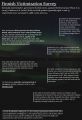
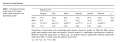
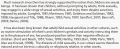
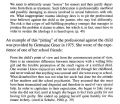
The EGL on Harm has some relevant information. Just right click/save and reproduce by uploading in short-form media to bypass character limits.
-
 Basic Rind Paradox infographic
 -
 Summarized Rind findings
 -
 Rind and Tromovitch (2000) on Iatrogenic Harm
 -
 Research pointing to no intrinsic harm profiled in The Guardian
 -
 What victimologists say about youth perception + admissions of iatrogenic harm
 -
 Self-perception: Importance
 -
 Some reading on secondary harm and perception/situational variables
 -
 More secondary harms
 -
 Intrinsic vs secondary harm
 -
 Daly's 2021 repetition of Rind (1998), finds that self-perception is far more important that abuse status
 -
 Lahtinen Report: Most common reason for not reporting - event not serious enough
 -
-
 Bender. Sexologist's observations in 1969
 -
 College outcomes: Benefits of college samples
 -
 LGBT outcome/perception data (links to papers in this release)
 -
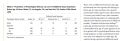 Arreola 2009 - Psych outcomes for LGBT "CSA" identical to no sex
 -
 Simpler way of expressing Lesbian outcomes (ref to modern feminism)
 -
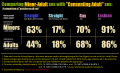 Further distillation of Rind's Kinsey analysis
 -
-
 Finer analysis of Finnish Victimization Survey (Rind)
 -
 General reading on intrinsic harm
 -
 Oellerich on the self-fulfilling prophecy of iatrogenic harm
 -
 Oellerich comments further on iatrogenic harm
 -
 CSA harm was known to be confounded even before Rind
 -
 No "typical" CSA reaction or "syndrome"
 -
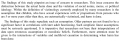 Rind on methodological issues/limitations of victimology
 -
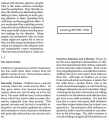 The Lanning (1992) report - full of hysterical conjecture, nevertheless describes the "most common" forms of offender and victim in banal terms that are applicable to most relationships (in order to prepare investigators to pathologize banality)
 -
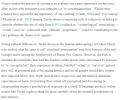 Percy Foundation review of Chloe Taylor: "Foucault, Feminism, & Sex Crimes"
 -
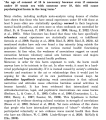 2022 debate response
 -
 Illinois state investigation finds a "pedophile" was his victims' "best friend"


.jpg)
.jpg)


