Research: Nonwestern Intergenerational Relationships
 | ||||||||||||
| Part of NewgonWiki's research project | ||||||||||||
|---|---|---|---|---|---|---|---|---|---|---|---|---|
|
| ||||||||||||
| ||||||||||||
|
| ||||||||||||
| Template: Research - This template |
Most societies which have not been influenced by the West have less, different, or virtually no sexual taboos. It is worth mentioning that absent modern western influence, anthropologists and historians have found far more societies where homosexuality is prohibited, than societies in which pedosexuality suffers similar censure. Many encourage intergenerational sex for various reasons. Due to ongoing Westernisation and cultural imperialism, much of what is listed here may already be consigned to history (see, for example, Nieto (2004), for an anthropological review).
GUS, a world atlas: Growing Up Sexually
The range and detail of accounts involved in this page will only serve as a brief demonstration of non-western diversity in intergenerational relationships. Many examples from anthropology involve Sexual rites of passage. If readers are seeking a broader, more detailed and integrated study, they may find Diederik Janssen's Growing Up Sexually (entire Vol 1 in zipped PDF) more appropriate, or Greek Love: Pederasty throughout the ages, re. homosexuality.
Brazil
Pirahã
- Daniel Everett (2008). Dont Sleep, There Are Snakes: Life and Language in the Amazonian Jungle. Chapter 16 of 34.
- "Relations between men and women and boys and girls, whether married or not, are always cordial and often marked by light to heavy flirting. Sexually it is the same. So long as children are not forced or hurt, there is no prohibition against their participating in sex with adults. I remember once talking to Xisaoxoi, a Pirahã man in his late thirties, when a nine- or ten-year-old girl was standing beside him. As we talked, she rubbed her hands sensually over his chest and back and rubbed his crotch area through his thin, worn nylon shorts. Both were enjoying themselves. “What’s she doing?” I asked superfluously. “Oh, she’s just playing. We play together. When she’s big she will be my wife” was his nonchalant reply—and, indeed, after the girl went through puberty, they were married."
- Daniel Everett (2016). Dark matter of the mind : the culturally articulated unconscious. Chapter 3
- "Pirahã young people begin to engage sexually, though apparently not in full intercourse, from early on. Touching and being touched seem to be common for Pirahã boys and girls from about seven years of age on. They are all sexually active by puberty, with older men and women frequently initiating younger girls and boys, respectively. There is no evidence that the children then or as adults find this pedophilia the least bit traumatic."
Argentina
Pilagá
- Jules Henry and Zunia Henry (1944). Doll Play of Pilagá Indian Children. An Experimental and Field Analysis of the Behavior of the Pilagá Indian Children. (American Orthopsychiatric Association), p. 72.
- Note: The study explores the use of dolls among Pilagá children, including in a sexual context.
- "Where children can see the adult sexual act, where sexual conversations and gestures are perfectly open, and child life is untrammeled by sexual taboos, it is reasonable to expect that the children should experiment with their sexual apparatus and attempt to imitate adult sexual behavior. This is the case among the Pilagá. Considering the extent of child knowledge about sex and the age at which this knowledge becomes articulate - 3 years - intercourse in the Pilagá household must not only be visible to the children, but carried on with little if any attempt to conceal the act from them. Absolutely no prohibition is placed on child sexual activity by the adults, so that the children are at liberty to do what they please. Under such circumstances the only limits to the child's sexual activity are his physiological capacities and the tolerance of his companions. [...] [S]ex is a strong and constant interest of Pilagá children."
Australia
Tiwi
- Davenport, William H. (1992). Adult-Child Sexual Relations in Cross-Cultural Perspective, in W. O'Donohue & J. H. Geer (Eds.), The sexual abuse of children: Theory and research (Vol. 1, Hillsdale, NJ: Erlbaum, 73-80), pp. 76-77.
- "The best ethnographic description of this type of [gerontocratic] marriage is by Jane Goodale (1971) in her account of the Tiwi who live on Melville Island, North Australia. Betrothals of first marriages of most females are made even before those females are concieved. In fact, such a marriage contract is made when the as-yet-to-be-concieved girl's mother commences menstruation. [...] Once the marriage contract is made, the husband-to-be, who is an adult, works with his future mother and father-in-law as a member of that family, with the expectation that when a daughter is born to them, she will be given to him as a wife. There is no fixed chronological age at which the young girl is given to her designated husband, but it occurs after she is able to take on some household and other economic responsibilities, but well before her first menstruation. For the Tiwi she is still a child, albeit and older child. When her father decides that she is mature enough, the young girl is merely taken to her husband and instructed to reside and sleep with him. This is not an abrupt change [...] for the husband has been a part of the same family camp for some time, and the young wife is still surrounded by those with whom she has always lived. Goodale describes the process:
- Soon after the alinga [young girl] moves to her husband's fire he begins her sexual instruction. From all accounts this appears to be a very gradual process. He begins by deflowering her with his finger, and perhaps only after a year does he have actual intercourse with her. Sexual intercourse is considered by the Tiwi to be the direct and only cause of breast formation, growth of pubic and auxillary hair, menarche, and subsequent menstrual periods. (1971, p. 45)." [Jane Carter Goodale (1971) Tiwi wives: a study of the women of Melville Island, North Australia]
- "versions of this marriage were once found among many Australian Aborigine groups (Berndt & Berndt, 1951; Gale, 1970; Kaberry, 1939; Rose, 1960). From our ethnocentric [i.e. Western] perspective, one of the most notable aspects [...] is the absence of trauma". (p. 77).
- "The best ethnographic description of this type of [gerontocratic] marriage is by Jane Goodale (1971) in her account of the Tiwi who live on Melville Island, North Australia. Betrothals of first marriages of most females are made even before those females are concieved. In fact, such a marriage contract is made when the as-yet-to-be-concieved girl's mother commences menstruation. [...] Once the marriage contract is made, the husband-to-be, who is an adult, works with his future mother and father-in-law as a member of that family, with the expectation that when a daughter is born to them, she will be given to him as a wife. There is no fixed chronological age at which the young girl is given to her designated husband, but it occurs after she is able to take on some household and other economic responsibilities, but well before her first menstruation. For the Tiwi she is still a child, albeit and older child. When her father decides that she is mature enough, the young girl is merely taken to her husband and instructed to reside and sleep with him. This is not an abrupt change [...] for the husband has been a part of the same family camp for some time, and the young wife is still surrounded by those with whom she has always lived. Goodale describes the process:
- Jane C. Goodale (1962) "Marriage Contracts among the Tiwi." Ethnology, Vol. 1, No. 4
- "A Tiwi male will rarely acquire a wife through any form of contract before the age of 30. A bestowed wife, one who is promised before birth and becomes a cohabiting wife before puberty, is a valuable prestige symbol, but difficult to acquire. Thus a young man will frequently start his household with the acquisition of a less valuable but more easily obtainable type of wife, i.e., a widow, often of advanced age."
- "[I]t is acknowledged by Tiwi women as an inflexible "rule" governing their first marriage before puberty to a man whom they describe as "the one who grew me up, treated me like a father, and made me a woman." "
- "[O]n the average, the promised daughter will be born ten years from the date of the contract, i.e., when both the mother and the son-in-law are about twenty years old. The young girl will not become a cohabiting wife for approximately another eight or ten years, at which time her promised husband will be at least 28 to 30 years of age. Thus an average difference of twenty years between the ages of a girl and her first husband is to be expected"
- Goodale, J. C. (1971). Tiwi wives: A study of the women of Melville Island, North Australia.
- “A man will not receive a contract for a wife of any type until he reaches the age of ten to twenty. At this age he may receive a wife who has been previously married”
Aranda
- Ford, C. S., & Beach, F. A. (1951). Patterns of sexual behavior. Harper & Brothers.
- "Among many of the aborigines of Australia this type of coitus is a recognized custom between unmarried men and uninitiated boys. Strehlow writes of the Aranda as follows: "... Pederasty is a recognized custom.... Commonly a man, who is fully initiated but not yet married, takes a boy ten or twelve years old, who lives with him as a wife for several years, until the older man marries.[...]"(Strehlow, 1915, p. 98.)"
Melanesia
Melanesian societies have normalized the consumption of semen by prepubescent/pubescent boys. This is thought to be in aid of their maturation and future status as warriors. Semen is received via oral or anal sex with an older adolescent boy or man. Relationships are said to be not only formal but often free-flowing and affectionate (for example among the Sambia of New-Guinea). There are many separate groups with distinct languages in Melanesia (about 1000). There is no evidence of institutional intergenerational sexual practice for most of them, partly due to anthropologists have often avoided studying sexuality because of their own moral constraints. Yet evidence of such practices (that vary greatly in form) has been obtained for at least 29 different Melanesian societies (with additional 19 related groups) described in comprehensive volume Ritualized Homosexuality in Melanesia[1] (see table 1.1, chapter 1):
- I. Eastern insular Melanesia: Fiji; New Caledonia; New Hebrides: Malekula Island.
- II. Northeastern insular Melanesia: New Britain; Duke-of-Yorks; East Bay.
- III. Western Papua: Lower Fly River: Kiwai Island, including Bugilai; Trans-Fly Delta: Keraki; Suki; Boadzi. (Related social units: Karigare, Yarne, Kaunje, Wekamara.)
- IV. Southeastern Irian Jaya: Kanum; Yéi-anim; Marind-anim; Kimam, Frederik Hendrik Island; Jaquai. (Related social units: Maklew-anim, Yab-anim, Kurkari-anim.)
- V. Northeastern Irian Jaya: Asmat; Casuarina Coast; Humboldt Bay.
- VI. Great Papuan Plateau: Bedamini; Etoro; Kaluli; Onabasalu; Gebusi, Nomad River.
- VII. Anga (Kukukuku): Sambia; Baruya; Jeghuje; Other Highlands Anga groups; Lowlands Anga groups. (Related social units: Usarumpiu, Wantukiu, Aziana, Lohiki, Kapau, Ivori, Mbwei, Yagwoia, Ampale, Langamar, Menya, Katje.)
- VIII. Northern Province: Ai’i.
Excerpts:
- Herdt, G. H. (Ed.). (1984). Ritualized homosexuality in Melanesia. University of California Press.
- History/evolution
- "The accumulating evidence indicates that we are not only confronted in these Melanesian cultures with similar cultural and ecological systems; I propose that we are also faced with an ancient ritual complex that diffused through a vast area of lowland and fringe-area Melanesia, perhaps 10,000 years ago or less. [...] Left unchecked by Western pacification or colonialization, what would the long-term evolution of these marginal populations have been? Perhaps homosexual practices might have contributed to their extinction, but we cannot be certain of this possibility: if one accepts the assumption of ancient migrations and ritual practices, these groups had flourished for generations." (pp. 48, 58-59)
- "(RH [Ritualized Homosexuality]) groups tend to use initiation as the social mechanism for recruitment to their ritual cults and to the village-based warriorhood corps as well. Survival and social reproduction of communities depend upon the warriorhood, and initiation means introduction to homosexual activity. It also brings with it adult, masculine socialization, through successive ceremonies and related achievements. Thus homosexuality is linked to what are essentially military and age-graded organizations." (p.60) (this is in line with Evolutionary Mentorship-Bonding/Enculturation-Alliance Hypothesis
- Not only pederasty but also pedophilia:
- "An important and ignored aspect of initiation in (RH) [ritualized homosexuality] groups is that it frequently occurs before puberty, often as early as middle to late childhood (e.g., Marind-anim, Sambia, Keraki, etc.). Elsewhere I have argued that this young age is psychologically necessary for the radical resocialization [from the female wing of the society] into, and eventual sex-role dramatization expected of, adult men (Herdt 1981, 1982cf . Mead 1949; Young 1965)." (p.60)
- The following are several cases of documented prepubescent entry into ritualized sexual practice.
- Marind-anim:
- "[R]itualized anal homosexual practices are institutionalized on a widespread scale throughout the entire Marind area. [...]. Homosexual anal intercourse is begun in male initiation for boys between the ages of seven and fourteen years (Van Baal 1966:143-144). Afterward, boys live in the men's clubhouse for some six years, avoiding females and regularly engaging in anal intercourse." (pp. 25-25)
- "This transition happens when the first signs of approaching puberty become apparent. He is then made an aroi-patur, literally a black boy. His body is blackened all over, and a mother's brother is appointed to act as his mentor, his binahor-iather. The meaning of the word binahor is uncertain, but it probably refers to the mentor's main function, that of being the boy's pederast who, by "feeding" the boy anally, contributes to his physical growth." (p. 132)
- Etoro and Kaluli:
- "The Etoro achieve this [semen transmission] through oral intercourse, the Kaluli through anal intercourse, and the Onabasulu through masturbation and smearing of the semen over the bodies of the initates [...] The Kaluli are traditional enemies of the Etoro, and the Etoro particularly revile them for their initiatory practices which are regarded as totally disgusting. (The feeling is probably mutual.) [...] Among the Etoro, "a youth is continually inseminated from about age ten until he reaches his early mid-twenties" (Kelly 1976:45). [...] Kaluli initiation and homosexual activities, in contrast, seem more truncated: [...] When a boy is eleven or twelve years old, he is engaged for several months in homosexual intercourse with a healthy older man chosen by his father. [...] (Schieffelin 1976:124)" (pp. 34- 35)
- Sambia:
- "Male development and masculinization after childhood are the responsibility of the men's secret cult and its initiation system. This cult is organized and perpetuated by the confederacy of hamlets. Boys are initiated at seven to ten years of age, when they are separated from their mothers, natal households, and younger siblings. [...] Sambia practice secret homosexual fellatio, which is taught and instituted in first-stage initiation. Boys learn to ingest semen from older youths through oral sexual contacts. First- and second-stage initiates may only serve as fellators; they are forbidden to reverse erotic roles with older partners. Third-stage pubescent bachelors and older youths thus act as fellateds, inseminating prepubescent boys. All males pass through both erotic stages, being first fellators, then fellateds: there are no exceptions since all Sambia males are initiated and pressured to engage in homosexual fellatio." (pp. 172-173)
- Kimam / Kolepom papuans:
- "The age at which boys enter the bachelor's house varies considerably in all villages, since it is dependent upon the simultaneous celebration of the final feast for a dead person. On this occasion a number of boys of varying ages, from about ten to fourteen years, are admitted. (Sometimes the boys are even younger.) [...] At his entry into the cult house, the boy is placed under the charge and guidance of a mentor who is designated as his "adoptive father." This man is supposed to have regular homosexual intercourse with the boy to make him strong with the semen that is inserted into his body through anal intercourse. In the western villages, there is no doubt that the adoptive father is mother's younger brother [...] They help each other in planting and harvesting, and they share food. A sister's son displays a conspicuous lack of respect toward his MB, even when there is a substantial difference in age. They play all sorts of pranks on each other, at which neither of them does or should get angry." (p. 300, 304)
- Kimam girls:
- "The first reports of missionaries and government officials mention the custom of "testing" sexually the marriageable girls. According to informants, the intention was to see whether the girls could stand the test. If they felt ill after intercourse, it was proof that they were not yet suited for marriage. It is possible that this trial took place during the promiscuous sexual intercourse of the ndambu festival.[...] When, for instance, an epidemic strikes the village and causes many deaths, as often happens, promiscuous heterosexual intercourse involving as many people as possible is organized in the village to collect large amounts of semen (probably by coitus interruptus). According to the information collected in the village of Bamol, very young girls are preferably selected for this sexual intercourse. [...] The first missionaries were in a better position to estimate the approximate age of the girls. They regularly made mention of schoolgirls who, for days on end, did not attend the mission school because they were sick after intercourse with a number of mature men. In his diary, Father Thieman (n.d.) mentions a number of girls (with names and exact age) who took part in sexual intercourse when they were no older than eight." (pp. 301, 304, 308)
- Bedamini:
- “Bedamini, like the Marind-anim (Van Baal 1966:817), consider semen the essence of life. [...] Immature boys do not possess semen, and they can mature only through the intervention of their seniors. Behind this conception is also the assumption that weakness in males will ensue from too much association with women, in particular through sexual intercourse. Boys have been breast-fed and have spent their first years in a predominantly female sphere of influence. The solution to this dilemma is to supply the boys with semen from the age of eight to ten years. The insemination is managed orally, by having the boys manipulate and suck the penes of young unmarried men, an activity referred to as sibi. The young man who will be a boy's inseminator is selected by the boy's father, and he must belong to the opposite moiety, that is, to a group with whom the boy's clan intermarries.” (pp. 322-323)
Other sources.
- Review of Gilbert Herdt's famous fieldwork on the Sambia (by Walter L. Williams as quoted in our page on Herdt):
- "Between the ages of about seven and thirteen, boys are taken from the maternal household and placed in a separate boys' house away from the village. For a period of several months to several years, depending on the culture, boys avoid all contact with females as they are prepared for manhood in elaborate initiations. It is the social duty of men to plant sperm in boys in order for them to grow. In some societies this is done by the boy performing oral sex upon the man, in others by him receiving anal intercourse, or in others by having the sperm rubbed on his body. The sexual act must always be with the boy receiving the older male's semen. To reverse roles is considered damaging to the boy's growth."
- Davenport, William H. (1992). Adult-Child Sexual Relations in Cross-Cultural Perspective, in W. O'Donohue & J. H. Geer (Eds.), The sexual abuse of children: Theory and research (Vol. 1, Hillsdale, NJ: Erlbaum, 73-80), pp. 76-77.
- "The best description of these patterns, by Herdt (1982, 1987) is with a people the author calls the Sambia. In brief, the pattern is as follows:
- Seven-to-ten-year-old Sambia boys are taken from their mothers when first initiated into the male cult, and thereafter experience the most powerful and seductive homosexual fellatio activities. For some ten to fifteen years, they engage in these practices on a daily basis, first as fellator, and then as fellated. Elders teach that semen is absolutely vital: it should be consumed daily since the creation of biological maleness and the maintenance of masculinity depend upon it. Hence, from middle childhood untul puberty, boys should perform fellatio on older youths.
- "The best description of these patterns, by Herdt (1982, 1987) is with a people the author calls the Sambia. In brief, the pattern is as follows:
- Near puberty the same initiates become dominant youths. Ritual helps remake their social and erotic identity, the bachelors becoming the fellated partners for a new crop of ritual novices. ... [editor's quote extension from Herdt, G. H. (1987). "Guardians of the flutes: Idioms of masculinity" : "abundant evidence indicates that most youths also experience them as pleasurable and erotically exciting"] Yet, in spite of this formidable background, the final outcome is exclusive heterosexuality—of a particular form. Youths eventually become sexually attracted to women. At marriage (c. sixteen to twenty-five years of age), they may even act as true bisexuals, for a time. With fatherhood, however, homosexuality should cease; thereafter men should engage only in heterosexual activities. (Herdt 1987, pp. 2-3)"
- Davenport, William H. (1992). Adult-Child Sexual Relations in Cross-Cultural Perspective, in W. O'Donohue & J. H. Geer (Eds.), The sexual abuse of children: Theory and research (Vol. 1, Hillsdale, NJ: Erlbaum, 73-80), pp. 76-77.
- "[I]n a society called East Bay, where I did some ethnography of sexual behavior (Davenport 1965), formerly, there had been a pattern of male homosexuality in which some older men often took, always with consent from their fathers, nonrelated boys as relatively permanent, passive sexual partners for anal intercourse. From a cultural perspective, the boys were understood to be substitutes for females, not homosexual partners as our culture would define them. In fact, the culture of East Bay did not recognize — that is, had no cultural category for — intimate male homosexual relationships as something separate from those involving women. A boy, rather than a man, was selected, because a boy was a minor, without an independent legal status separate from his father’s, hence he could be told what to do. Women in East Bay society also were minors in this legal sense. But the crux of the matter was that the passive homosexual role was not considered to be in any way damaging to a boy’s psychosexual development. Moreover, such a close association with an elder man, who was expected to be gentle, generous, and indulgent, could have a positive effect on the boy’s development. If, however, the elder man did not fulfill these role expectations, he would find himself accused of mistreatment, that is, abusing the boy, and, therefore, in serious trouble with the boy’s father and other senior male relatives who were responsible for his well-being."
- Hyena, Hank (1999). "Semen Warriors Of New Guinea," Gettingit.com, September 16.
- "Although many boys tremble initially ("I felt afraid... the penises were enormous," recalls Kalutuo, a Sambian from the Eastern Highlands) they all adjust quickly, because they believe semen is an elixir for manhood."
- Knauft, Bruce M. (1987). "Homosexuality in Melanesia," Journal of Psychoanalytic Anthropology, 10, 155-91.
- Melanesian boys "coquettishly initiated" homosexuality with grown men. Relationships were "grounded in personal affection rather than obligation".
- Anitei, Stefan (2007). "How to Drink Sperm to Become a Strong Man," Softpedia, October 6.
- "This power is transmitted between the members of the tribe by means of sex. That's why young boys, even at the age of 12, get it from the sperm of the older males. The boy gets "power" orally by a young man assigned to be his partner. Few years later, the teenager is formally involved in relationships with many male sex partners, after which he turns into an "inseminator" from an "inseminee.""
- Janssen, D.F. (2002). "Papua New Guinea," Growing Up Sexually, Volume I: World Reference Atlas.
- "...the “Sambia” value male-virgin contacts (1984:p177), while “sexual partners are perceived as having more “heat” and being more exciting the younger they are. A second factor is reciprocity: the more asymmetrical the sexual partners (youth/boy), the more erotic play seems to culturally define their contact” [sic]. Against the background of an utterly phallocentric ideology on the androtrophic properties of semen, “Sambia” prepubertal boys (7-12, on average 8.5) fellate post-pubertal adolescents to ejaculation in order to grow and turn seminarchic themselves, so that they may reverse roles. The boys do not have orgasms, and might have “vicarious erotic pleasure as indicated by erections” only “near puberty” (Herdt and Stoller, 1990:p70-1)."
- "Berndt (1962:p91): “As babies and small children their genitalia are fondled”. Mothers caress “the fleshy parts of [the infant's] body [...] and implanting breathy kisses over and over again in the region of its genital organs” (Hogbin, 1943:p298). Genital touching by older people was also noted by among the Marind-anim (Van Baal, 1966; cf. Money and Ehrhardt, 1973 [1996:p132]). Gillison (1993:p176) describes the process of masturbating infants among the Gimi:
- The mother insists upon continued contact, interrupting her toddler's play repeatedly to offer the breast. Masturbation [...] with a baby girl [occurs when] the mother or amau holds her hand over the vulva and shakes it vigorously. She may kiss the vagina [sic], working her way up the middle of the body to the lips and then inserting her nipple (often when the child has given no sign of discontent). With a boy, she kisses the penis, pulls at it with her fingers and takes it into her mouth to induce an erection. Several women may pass a baby boy back and forth, each one holding him over her head as she takes a turn sucking or holding the penis in her mouth. When the child then pulls at his own organ, the women, greatly amused, offer squeezes and pulls of their own."
The Trobrianders of Papua New Guinea[2] have received attention in the Western Media for sexual customs in infancy and adolescence that confuse morally conflicted Westerners:[3]
Popularly referred to as “The Islands of Love”, the Trobriand Islands are a 174-square-miles group of islands on the east coast of New Guinea. The people are indigenous matrilineal people with a population of 12,000. [...] In the Trobriand culture, children aren’t allowed the chance to be just children. They are groomed to lose their innocence and start acting like adults at a very young age. By the age of six, they start participating in erotic games with each other. They start engaging in seductive activities. Their little girls are expected to start looking and acting sexy to attract little boys as well as older men. Then, by the time they turn 10, they are expected to start having sexual intercourse with as many sexual partners as they will. Since they are a matrilineal culture, the Trobriand woman has the right to have as many sexual partners as she pleases. And their primitive way of dressing doesn’t make it any harder to engage in sexual intercourse at will.
- Money, J. (1990). Pedophilia: A Specific Instance of New Phylism Theory as Applied to Paraphilic Lovemaps. In: Feierman, J.R. (eds) Pedophilia: Biosocial Dimensions. Springer, New York, NY. doi:10.1007/978-1-4613-9682-6_18
- "The cultural tradition of pedophilia may belong not just to a small enclave of a population but also to an entire community, as in the case of various tribal peoples scattered across the Pacific in Melanesia and New Guinea (Herdt, 1984). The Sambia of the New Guinea Highlands (Herdt, 1981) are such a tribe. Their ancient customs as fierce head-hunting warriors survived European contact until after World War II. According to their folklore concerning their children, a boy could not become a warrior if he stayed living with women and children after age 8. So, he was taken into the men's longhouse to remain in the company of males only, there to be subjected to the rituals of indoctrination and initiation. As a baby, he had been nourished by woman's milk. As a juvenile, he would have to be nourished with men's milk so that his body would mature in the way that maturation occurs during puberty. It was an obligation of youths still too young to be married not to waste their semen but to have it sucked out of their penises by the prepubertal boys who, once able to ejaculate themselves, would nourish those still younger. At age 19, the age of marriage, their two-way experience of androphilic pedophilia would cease, and their lives would become heterosexual with an adult partner."
- "The universal male/male pedophilia of the Sambia demonstrates the sexological plasticity of the human organism and the making of pedophilia into the social norm."
- Williams, F.E. (1969) Papuans of the Trans-Fly. Oxford
- "It is actually regarded as essential to the growing boy to be sodomized.[...] In the meantime it is enough to note that every male adult in the Morehead district has in his time constantly played both parts in this perversion. The boy is initiated to it at the bull-roarer ceremony [...] When he becomes adolescent his part is reversed and he may then sodomize his juniors, the new initiates to the bull-roarer."
- "Gambadi informants describe the initial occasion more vividly. The father bids his son stoop to drink at a pool and as he does so catches him at a disadvantage. [...] It is to be noted that nowadays boys are not sodomized by their own fathers. The restriction of moiety exogamy is observed in sodomy as it is in marriage [...]"
- Jan N. Bremmer (2021) Becoming a Man in Ancient Greece and Rome. Essays on Myths and Rituals of Initiation.(available via Option 2)
- "This description [see Williams' above] is confirmed by more recent anthropological studies [See especially the many studies of G. Herdt] [...] the following points should be noted as important features: (1) we have here a case of pederasty, which should not be confused with modern homosexuality, as both initiators and novices normally marry afterwards; (2) the active pederasts are the novices of the previous initiation, and it may be of importance to note that it is these novices who usually play a prominent role in upholding discipline during the initiation; finally, (3) copulation, in which the novice is always the passive partner, takes place anally."
- Ford, C. S., & Beach, F. A. (1951). Patterns of sexual behavior. Harper & Brothers.
- "Keraki bachelors of New Guinea universally practice sodomy, and in the course of his puberty rites each boy is initiated into anal intercourse by the older males. After his first year of playing the passive role he spends the rest of his bachelorhood sodomizing the newly initiated."
Philippines
- Burger, G.C. (Date unknown). The Sexual Mistake of the West.
- "Enamored of travel, he went to a different country every year, and, that year, he visited the Philippines. Not wanting to stay in the capital, he had taken the bus in order to get closer to the population. He thus found himself next to a mother who had reserved only one seat for herself and her eight-year-old daughter. The child at first amused herself by running in the central aisle and approaching the other passengers, but after three hours on the way, she began to have enough. As she was becoming more and more cranky, the mother put her on her lap and asked our gentlemen from Bordeaux if it would bother him if she put her daughter’s legs on his knees, so that the little one could sleep better. He accepted, of course, when he noticed that the mother began masturbating the child, as if it were the most natural thing in the world. You can imagine him blushing, asking himself what he should do, looking all around him to see how the other passengers would react, feeling that he would be accused of complicity in incest. But all the neighbors watched with big calm smiles, as if it were obvious, and worthy of the greatest discretion. As soon as the little girl reached orgasm, she fell asleep like an angel..."
Polynesia
Marquesas Islands
For a range of sources on the Marquesas Islands, see gallery below, primarily Marquesan sexual behavior by Robert C. Suggs.[4]
- Martinson, Floyd M. (1973). Infant and Child Sexuality: A Sociological Perspective. The Book Mark.
- "Sex play was common practice from the earliest ages among the Marquesa and not only tolerated but encouraged. (Kardiner, 1939, p. 205-206). They recognized the erotic impulse in childhood and accorded it the right of free exercise. They eroticized the child by masturbating it to keep it quiet. In the case of the girls, labia were manipulated as a placebo, but also to encourage the growth of large labia, which to the Marquesans was a mark of beauty. Such activity was, no doubt, also erotically stimulating. There was social recognition of all sexual activity in childhood, and there were no restrictions against encouragement to exercise it freely; it was allocated the same place in the child's world that it occupied in the adult's."
Indonesia
Bali
- Martinson, Floyd M. (1973). Infant and Child Sexuality: A Sociological Perspective. The Book Mark.
- "Among the Balinese, play and teasing with the genitals is common. A mother will pat her baby girl on the vulva and exclaim, "Pretty! Pretty!" (Bateson and Mead, 1942, p. 26, 32, 131). A boy's penis will be stroked and rubbed. After he has urinated, he will be dried by a flick of his penis. As he grows older, his penis will be pulled and stretched and ruffled, and he will often attempt to keep his balance when learning to walk by holding on to it. Babies are comforted and quieted by manipulating their genital organs. In fact, in Bali, a baby, especially a baby's genital, is a toy with which to play. There is much delight taken in stimulating and playing with the baby to watch him respond."
Nepal
Khumbo
- Diemberger, H. (1993). Blood, sperm, soul and the mountain. In T. del Valle (Ed.), Gendered Anthropology (pp. 88). Routledge.
- "Caili, an energetic and sensual woman, is playing with her youngest son, Migmar. I enter the house. Caili offers me a cup of barley beer and then continues to play with Migmar who does not really want to be disturbed. He drinks some milk from the breast and plays with his erect little penis. He offers it to his mother who sucks it tenderly and then continues to chat with me. Migmar is five years old."
Nigeria
Kadar
- Harris, M. Cultural Anthropology (New York: Harper and Row, 1983), p. 94.
- "Among the Kadar of northern Nigeria, as reported by M. G. Smith (1968),[5] most marriages result from infant betrothals. These matches are arranged by the fathers of the bride and groom when the girl is 3 to 6 years old. Ten years or more may elapse before the bride goes to live with her betrothed. During this time, a Kadar girl is not unlikely to become pregnant. This will disturb no one, even if the biological father is a man other than her husband:
- Kadar set no value on premarital chastity (1968, p. 113)."
- "Among the Kadar of northern Nigeria, as reported by M. G. Smith (1968),[5] most marriages result from infant betrothals. These matches are arranged by the fathers of the bride and groom when the girl is 3 to 6 years old. Ten years or more may elapse before the bride goes to live with her betrothed. During this time, a Kadar girl is not unlikely to become pregnant. This will disturb no one, even if the biological father is a man other than her husband:
Kenya and Tanzania
Massai
- Carles Feixa (2011). Past and present of adolescence in society: The ‘teen brain’ debate in perspective. Neuroscience & Biobehavioral Reviews, Volume 35, Issue 8
- "Sexual intercourse with [postpubertal] girls is admitted as long as they do not become pregnant."
North Africa
Siwans
- Ford, C. S., & Beach, F. A. (1951). Patterns of sexual behavior. Harper & Brothers.
- "Among the Siwans of Africa, for example, all men and boys engage in anal intercourse. They adopt the feminine role only in strictly sexual situations and males are singled out as peculiar if they do not indulge in these homosexual activities. Prominent Siwan men lend their sons to each other, and they talk about their masculine love affairs as openly as they discuss their love of women."
India
Muria
- Elwin, V. (1947). The Muria and their Ghotul. Oxford: Oxford University Press. [Childhood of the Muria people of Bastar, in central India, as summarized here in scholarship by Tom O'Carroll (2018)].[6]
- "Anthropologist Verrier Elwin described the elaborate sexual apprenticeship children have, which takes place principally in a special house for the young, known as the ghotul. Infants and toddlers sleep in their parents' house. There are no locked doors and these little children inevitably see something of their parents' intimacies. By the time the children are six or seven a new domestic arrangement is brought into play. The child goes of to the ghotul, a self-regulated domain with its own boy leader and girl leader. The little children are free to come and go as they please between the ghotul and the parental home. Within the ghotul the children are free to engage in sex rehearsal play. Adolescents are able to have intercourse as they choose, able to experiment with different partners and under no pressure to make a premature commitment (Elwin 1947). Elwin, who spent much of his life in India, thought the arrangement worked very well. [...] In 1982, to the surprise of the academic community, it was reported that the ghotul system was still in existence and even expanding (von Fürer-Haimendorf 1982). [...] Elwin says that in practice [girls becoming pregnant] was a rare occurrence in the ghotul, even in the absence of modern contraceptives."
Crow
- Ford, C. S., & Beach, F. A. (1951). Patterns of sexual behavior. Harper & Brothers.
- "A few Crow men adopt women's dress and mannerisms, and live alone. Adolescent boys and occasionally older men visit these bate, as they are called. The bate stimulates the boy's genitals orally. One informant stated that there were four such men in his community and that seventeen of his adolescent friends visited them occasionally."
The Balkans
Albania
- Zimmerman, Ann (1994). "'Tell Mama Why You Cry' (Part I)," (archive), Dallas Observer, November 17.
- An Albanian immigrant to the US is arrested for retaining his culture: "This harsh--and irreversible--punishment came at the end of a strange case that began in 1989 when several witnesses reported seeing Krasniqi fondle his daughter during a karate tournament in a Plano high school gymnasium in which his son was competing. Several years after the family court ruling, Krasniqi finally had his day in criminal court. Collin County Judge Nathan White acquitted him of the charge of indecency with a child primarily on the strength of testimony from Massachusetts anthropologist Barbara Halpern--one of the country's foremost authorities on the peasant culture of the Balkans. Halpern explained that Sam Krasniqi's actions were done not with sexual intent, but rather with playful affection--in keeping with his culture, which cherishes children and showers them with physical affection. [...]
- Shortly after the tournament began, Taylor's attention was drawn to the spectator in front of her. She watched as a 50-year-old man with thinning gray hair repeatedly rubbed the underpants-clad buttocks and bare legs of a little girl who was laid out across his lap. He also slipped his hand under the girl's panties and caressed and squeezed her buttocks. "He lifted her to face him and rubbed her front chest under her little dress. He then put his hand inside her panties from the leg opening and squeezed her vagina," Taylor wrote in a statement she gave police. [...]
- Wunderlich, who did not retrun calls to the Observer, had to explain to Kathy what molestation meant. "If you mean something sexual like with me and my husband, you are wrong," Kathy responded. "It is not a sexual thing and there is no harm to my children," Kathy told Wunderlich. [...]
- "According to Wunderlich's case notes, he admitted touching Lima and Tim, that it was acceptable in his country and it was just a big misunderstanding. "He denied it was sexual at all and said that I could kill him if he was lying and if it was sexually gratifying to him." Krasniqi has since insisted that Wunderlich misconstrued what he was telling her. At the karate tournament, Krasniqi insists he was just playing a game with his daughter--touching the parts of her body and asking her to say their names. "I tell Wunderlich, How can you love your children and not touch them?" Krasniqi explains, sitting in his home, surrounded by pictures of his children when they were younger.
- Nowhere in Wunderlich's case notes does it indicate that anyone in her department tried to research the Krasniqis' culture. If they had they might have learned what Barbara Halpern, the anthropologist from Massachusetts, testified to in Krasniqi's criminal trial. The Krasniqis come from "very physically demonstrative culture. Children are universally adored. Until they attain school age and venture beyond the household gates, they are the constant subjects of hugs, caresses and overt displays of affection.""
Hawaii
- Janssen, D.F. (2002). "Hawaii," Growing Up Sexually, Volume I: World Reference Atlas.
- "Karsch-Haack, (1901) stated that according to Richard Neuhauss, Hawai’ian “girls of 12 to 14 years are generally virgins no more and acts of impurity of father with daughter are no rarity[6] [...] For infant females in Hawai’i, “milk was squirted into her vagina, and the labia were pressed together (Diamond, 1990). The mons [veneris] was rubbed with kukui (candlenut) oil and pressed with the palm of the hand to flatten it and make it less prominent. The molding continued until the labia did not separate. This chore usually was done by the mother or by an “aunt” [...]”. The buttocks of infants, males more than females, were molded so that they became “rounded and not flat”, also clearly evolving from an aesthetic motive. A “blower” is designated for each male infant, ostensibly to prepare him for subincision of the foreskin: “the penis was blown into daily starting from birth. The blowing was said to loosen and balloon the foreskin [and] continued daily [...] until the young male was 6 or 7”, when penile subincision takes place. Diamond reports: “Individuals of both sexes were expected to initiate and participate in coitus at puberty, although sexual activity, play, instruction, and so forth occurred much earlier. For instance, as part of exploratory play, the young investigated each other’s genitals, and young males and females might masturbate each other heterosexually or homosexually. This activity occurred without adult disapproval, and it was considered to be an introduction to adulthood. Casual intercourse before adolescence was not an uncommon experience for males (Handy and Pukui, 1958) and females (Pukui, Haertig and Lee, 1972)"
- Milton Diamond. (2004 [1990]). Sexual Behavior in Pre Contact Hawai'i: A Sexological Ethnography. Published in: Revista Española del Pacifico. 16: 37-58.
- "Sex training was direct and firsthand. Young individuals learned of coitus and sex play from instruction, direct observation, and practice. As they slept in the family house (hale noa), they observed their parents having coitus. "Public privacy" among the Mangaian Islanders, as it was described by Marshall (1971, p. 108), probably is similar to the "privacy" that was found in Hawai'i and elsewhere in Polynesia: "[A Mangaian may copulate], at any age, in the single room of a hut that contains from five to fifteen family members of all ages — as have his ancestors before him. His daughter may receive and make love with each of her varied nightly suitors in the same room."
- The young observed dogs, pigs, and other animals mating, and these activities were discussed openly with parents or other adults. Parturition was not a secret event and was well attended by the young and by adults, all of whom observed traditions that included the washing and burying of the placenta and, usually, the disposing of the umbilical cord (Pukui, Haertig and Lee, 1972, p. 16; Handy and Pukui, 1958, p. 78). The young Hawai‘ian also acquired sex education in day-by-day exposure to precepts, practices, and attitudes concerning sex. Traditionally, ... childish curiosity about sex was satisfied, with neither guilt nor shame instilled” (Pukui, Haertig, and Lee, 1972, p. 249). [...] Ellis (1782, Vol. 2, p. 153) wrote of sexual expression in Oceania: "The ladies are very lavish of their favors ... and some of their attachments seemed purely the effects of affection. They are initiated into this way of life at a very early period; we saw some, who could not be more than ten years old."
- The time considered “right” to start coitus was not so much based on chronological age as on ability or maturity (Pukui, Haertig, and Lee, 1972, p. 78). [...] Suggs (1966) elaborated on the early sexual experiences of pubertal males with married females in their 30s and 40s in the Marquesas Islands, who “take special pains to be pleasing and patient with them ... a source of enjoyment for many Marquesan women” (p. 61). For young females of the Marquesas Islands, the first coital experience reportedly is earlier than it is for young males before menarche —and occurs unplanned with an adult male (Suggs, 1966, p. 63). [...] These adult/nonadult sexual interactions were socially approved behaviors. [...] For adults not to have given such practical education would have been unthinkable - a dereliction of duty.
- Most important for Hawai‘ian society, the young learned of sexual humor. Among the Hawai‘ians, sex was and remains a rich source of humor and enjoyment. In everyday conversation and in song and story, it was considered to be an “art form” to speak using sexual double entendres (kaona). [...] Suggs (1966, p. 39) considered the early manifestations of infantile and childhood sexual behavior, including sexual behavior with adults, to be among the most distinguishing features of Marquesan sexual behavior. Many of the activities he described, however, are similar to activities that were present in Hawai'i and elsewhere in Oceania. Oliver (1974, pp. 458-459), for example, reported on adult/nonadult sexual behavior in Tahiti and quoted the missionary Orsmond from 1832: “In all Tahitians as well as officers who come in ships there is a cry for little girls,” and older females, when in a position to choose, preferred younger males. Marshall (1971, p. 126) described the routine early sexual encounters of young males and females in Mangaia as being with older, experienced males and females."
Sudan
Azande
- Evans-Pritchard, E. E. (1970). Sexual Inversion among the Azande. American Anthropologist, 72(6), 1428–1434.
- "It was the custom for members of bachelor companies, some of whom would always be living in barracks at court, to take boy-wives. [...] Most young men consequently married late -- well into their twenties and thirties -- and, because girls were engaged (in a legal sense married) very young, often at birth, the only way youths could obtain satisfaction from a woman was in adultery. [...] The boys performed many of the smaller services a woman performs daily for her husband [...] Also, the boywife carried his husband's shield when on a journey. It should be understood that he performed these services lest it might be thought that the relationship was entirely of a sexual nature; it will be appreciated that it had an educational side to it. With regard to the sexual side, at night the boy slept with his lover, who had intercourse with him between his thighs (Azande expressed disgust at the suggestion of anal penetration). The boys got what pleasure they could by friction of their organs on the husband's belly or groin. However, even though there was this side to the relationship, it was clear from Zande accounts that there was also the comfort of a nightly sharing of the bed with a companion."
- "The word "boy" (kumba gude) must, it would appear, be interpreted liberally, for as far as I could judge from what I was told the lads might have been anywhere between about twelve and twenty years of age"
- "I have pointedly used the terms "wife,""husband," and "marriage," for, as the texts will make clear, the relationship was, for so long as it lasted, a legal union on the model of a normal marriage. The warrior paid bridewealth (some five spears or more) to the parents of his boy and performed services for them as he would have done had he married their daughter; if he proved to be a good son-in-law they might later replace the son by a daughter. Also, if another man had relations with his boy he could, I was told, sue him at court for adultery."
See also
- Research: Intergenerational Relationships in History
- Pederasty in Islam
- Pederasty in Japanese culture
- The Spirit and the Flesh (1986) - the book by Walter L. Williams with a broad section on pederasty among non-western societies
- Gilbert Herdt - anthropologist who studied ritualized intergenerational homosexuality in Melanesia
Excerpt Graphic Library
The EGL on Broader Perspectives has some relevant information. Just right click/save and reproduce by uploading in short-form media to bypass character limits.
-
 Janssen on Traditional Hawaii
 -
 Janssen (notes and sources) on Hippie Communes
 -
 Berger on Hippie Communes
 -
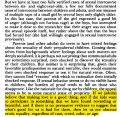 More from Berger on communes
 -
 Don't Sleep, There Are Snakes: Life and Language in the Amazonian Jungle, by Daniel Everett.
 -
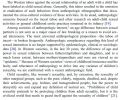 Jose Nieto (2004): Children and adolescents as sexual beings: cross-cultural perspectives (chilling effect on Anthropology)
 -
 Some interesting historical perspectives: US and UK
 -
 Mark Smith, Ros Burnett on a controversial British Special Girls School
 -
 Wikipedia on Greek Pederasty Institution
 -
 Sex Atlas on cathartic Adult-Child sex play
 -
 Data on first marriage in prewestern societies (from the Binford Dataset)
 -
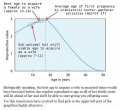 Reproductive Value Curve
 -
 Ramey's SIECUS Report - Incest and intrinsic harm
 -
 Inciardi on child prostitutes
 -
 Mirkin on CP Industry
 -
 Levine on CP Industry
 -
 Richard Green: Interactions seen as beneficial
 -
 Religious Laws/Norms - Judaeo Christian
 -
![Rind on historical pederasty throughout the world[7]](/wiki/images/thumb/Historical-Cultural-PederastyRind.jpg/120px-Historical-Cultural-PederastyRind.jpg)
-
 Rind continued
 -
 Rind on historical pederasty (cont'd)
 -
 Rind on historical pederasty (cont'd)
 -
 Rind on historical pederasty (cont'd)
 -
 Rind on historical pederasty (cont'd)
 -
 Rind on historical pederasty (cont'd)
 -
 Rind on historical pederasty (cont'd)
 -
 Rind combined in 1 image
 -
 Various excerpts on the Marquesas Islands
 -
 More from Suggs on the Marquesas Islands
 -
 Ford and Beach on cross-species/cultural data
 -
![Rind's summary on pederasty in animals[7]](/wiki/images/thumb/Rind_on_animals.jpg/22px-Rind_on_animals.jpg) Rind's summary on pederasty in animals[7]
Rind's summary on pederasty in animals[7] -
 One example from Bagemihl: Dolphins
 -
 Macaque age-gap sex play
 -
 Examples from Pedophilia: Biosocial Dimensions (Jay R. Feierman, ed.). New York: Springer-Verlag Publishers
 -
 Further from the above
 -
 Monkeys - direct screencap
 -
 Bonobo apes


![Rind on historical pederasty throughout the world[7]](/wiki/File:Historical-Cultural-PederastyRind.jpg)


![Rind's summary on pederasty in animals[7]](/wiki/File:Rind_on_animals.jpg)


References
- ↑ Herdt, G. H. (Ed.). (1984). Ritualized homosexuality in Melanesia. University of California Press.available via option 2
- ↑ Weiner, Annette B. (1988). The Trobrianders of Papua New Guinea. United States of America: Wadsworth, Cengage Learning. ISBN 9780030119194
- ↑ The Culture Where Children as Young as Six Years are Sexualized
- ↑ Marquesan sexual behavior by Suggs, Robert C.
- ↑ M. G. Smith (1968). 'Secondary Marriage among Kadera and Kagoro.' In Marriage, Family, and Residence, Bohannan, Paul and Middleton, J., eds. pp. 109-130. Garden City, N.Y.: Published for the American Museum of Natural History by the Natural History Press.
- ↑ Thomas O'Carroll (2018). Childhood ‘Innocence’ is Not Ideal: Virtue Ethics and Child–Adult Sex. Sexuality and Culture, 22:1230–1262 (pp. 1254-1255).
- ↑ 7.0 7.1 Bruce Rind - Pederasty: An Integration of Empirical, Historical, Sociological, Cross-Cultural, Cross-Species, and Evolutionary Evidence and Perspectives in eds Hubbard and Verstraete