Rind et al: Difference between revisions
The Admins (talk | contribs) No edit summary |
No edit summary |
||
| (29 intermediate revisions by 4 users not shown) | |||
| Line 1: | Line 1: | ||
{{Template:Ac}}__NOTOC__'''Rind et al''', or the '''Rind Report''' is the common name given to a study by [[Bruce Rind]], Department of Psychology Temple University, [[Philip Tromovitch]], Graduate School of Education Temple University and Robert Bauserman, Department of Psychology, University of Michigan entitled ''A Meta-Analytic Examination of Assumed Properties of Child Sexual Abuse Using College Samples'' published in The ''Psychological Bulletin'' of the [[American Psychological Association]], April 1999. | |||
== | ==Reaction to the Rind Report== | ||
This study generated a large amount of controversy, first by conservative talk show hosts such as "Dr." [[Laura Schlessinger]], but later spread through political circles to the US Congress where it was "condemned and denounced" by a unanimous vote of 355-0 (with 13 voting "present") on July 12, 1999.<ref>[https://www.govtrack.us/congress/votes/106-1999/h278 Govtrack Vote Data]</ref> | |||
However, pressed to justify itself, the APA submitted the meta-analysis to yet another round of scientific peer-review and study by statisticians who drew the following conclusion: | |||
<blockquote>''Ray Fowler, Ph. D., writes at May 25, representing the APA: "Because the article has attracted so much attention, we have carefully reviewed the process by which it was approved for publication and the soundness of the methodology and analysis. This study passed the journal's rigorous peer review process and has, since the controversy, been reviewed again by an expert in statistical analysis who affirmed that it meets current standards and that the methodology, which is widely used by the National Institutes of Health (NIH) to develop guidelines, is sound.''</blockquote> | |||
In addition, a number of press releases and rebuttals surfaced offering a variety of reasons why the study should be repudiated. The author, and others countered these rebuttals. | |||
==The study itself== | |||
It set about to investigate how previous research, taken as a collective, addresses these common assumptions: | It set about to investigate how previous research, taken as a collective, addresses these common assumptions: | ||
| Line 12: | Line 22: | ||
The authors undertook this through a meta-analysis, correlating the statistics from all known studies of CSA known to exist in the English language that use college samples. | The authors undertook this through a meta-analysis, correlating the statistics from all known studies of CSA known to exist in the English language that use college samples. | ||
== Abstract == | ===Abstract=== | ||
<blockquote>''Many lay persons and professionals believe that child sexual abuse (CSA) causes intense harm, regardless of gender, pervasively in the general population. The authors examined this belief by reviewing 59 studies based on college samples. Meta-analyses revealed that students with CSA were, on average, slightly less well adjusted than controls. However, this poorer adjustment could not be attributed to CSA because family environment (FE) was consistently confounded with CSA, FE explained considerably more adjustment variance than CSA, and CSA-adjustment relations generally became non-significant when studies controlled for FE. Self-reported reactions to and effects from CSA indicated that negative effects were neither pervasive nor typically intense, and that men reacted much less negatively than women. The college data were completely consistent with data from national samples. Basic beliefs about CSA in the general population were not supported.'' [quoted directly from the paper]</blockquote> | |||
== | ===Findings with respect to causality=== | ||
<blockquote>''The finding that family environment was confounded with CSA and explained nine times more adjustment variance than did CSA is consistent with the possibility that the CSA-adjustment relation may not reflect genuine effects of CSA ''[...]'' analysis of studies that used statistical control further supported the possibility that many or most CSA-symptom relations do not reflect true effects of CSA, because most CSA-adjustment relations became nonsignificant under statistical control.'' [quoted directly from the paper]</blockquote> | |||
===Gender gap (or absence of)=== | |||
<blockquote>''The overall difference between male and female college students in the CSA-adjustment relationship is not surprising, because men experienced coercion less frequently than women. ''[...]'' Because all levels of [[consent]] corresponds to social and legal definitions of CSA, these results imply that, in the college population, the association between CSA and adjustment problems is not equivalent for men and women. If the definition of CSA is restricted to unwanted sex only, however, then these results imply a gender equivalence between men and women in the association between CSA and adjustment problems.'' [quoted directly from the paper]</blockquote> | |||
===Commentary=== | |||
From Lilienfeld et al - ''50 Great Myths of Popular Psychology'':<ref>[https://www.pdfdrive.com/50-great-myths-of-popular-psychology-shattering-widespread-misconceptions-about-human-behavior-e162383810.html 50 Great Myths of Popular Psychology: Shattering Widespread Misconceptions about Human Psychology]</ref> | |||
<blockquote>''In 1998, Bruce Rind and his colleagues conducted a meta-analysis (see p. 32) of the research literature on the correlates of child sexual abuse in college students. They had earlier conducted a similar review using community samples, which yielded almost identical results (Rind & Tromovitch, 1997). Their 1998 article appeared in the American Psychological Association’s Psychological Bulletin, one of psychology’s premier journals. Chock full of dense numerical tables and the technical details of statistical analyses, Rind and colleagues’ article seemed an unlikely candidate for the centerpiece of a national political firestorm. Little did Rind and his colleagues know what was in store.'' | |||
''Rind and his co-authors reported that the association between a self-reported history of child sexual abuse and 18 forms of adult psychopathology—including depression, anxiety, and eating disorders —was weak in magnitude (Rind, Tromovitch, & Bauserman, 1998). The average correlation between the two variables was a mere .09, an association that’s close to zero. Moreover, a history of an adverse family environment, such as a highly conflict-ridden home, was a much stronger predictor of later psychopathology than was a history of sexual abuse. As Rind and his co-authors cautioned, the effects of early abuse are difficult to disentangle from those of a troubled family environment, particularly because each can contribute to the other. Surprisingly, they found that the relation between sexual abuse and later psychopathology was no stronger when the abuse was more severe or frequent.'' | |||
''The “Rind article,” as it came to be known, provoked a furious media and political controversy. Radio talk-show personality Dr. Laura Schlessinger (“Dr. Laura”) condemned the article as “junk science at its worst” and as a “not-so- veiled attempt to normalize pedophilia” (Lilienfeld, 2002). Several members of Congress, most notably Representatives Tom DeLay of Texas and Matt Salmon of Arizona, criticized the American Psychological Association for publishing an article that implied that sexual abuse isn’t as harmful as commonly believed. On the floor of Congress, Salmon referred to the article as the “emancipation proclamation of pedophiles.” Eventually, on July 12, 1999, the Rind article was denounced by the House of Representatives in a 355 to 0 vote, earning it the dubious distinction of becoming the first scientific article ever condemned by the U.S. Congress (Lilienfeld, 2002; McNally, 2003; Rind, Tromovitch, & Bauserman, 2000).''</blockquote> | |||
From Carol Tavris, ''The uproar over sexual abuse research and its findings, in Society (2000)'':<ref>[https://www.ipce.info/ipceweb/Library/00-018_uproar.htm Carol Tavris, ''The uproar over sexual abuse research and its findings, in Society (2000)''] see also [https://sci-hub.se/10.1007/bf02912285 Sci-Hub] for a version with no copying errors.</ref> | |||
<blockquote>''Perhaps the researchers' most inflammatory finding, however, was that not all experiences of child adult sexual contact have equally emotional consequences nor can they be lumped together as "abuse:' Being molested at the age of 5 is not comparable to choosing to have sex at 15. Indeed, the researchers found that two-thirds of males who, as children or teenagers, had had sexual experiences with adults did not react negatively.'' | |||
''Shouldn't this be good news? Shouldn't we be glad to know which experiences are in fact traumatic for children, and which are not upsetting to them?''</blockquote> | |||
== Some responses to critique == | |||
Following the methodological criticism by Dallam et al. (2001) and Ondersma et al. (2001), Rind et al. responded with an article: | |||
*'''Rind B, Tromovitch P, Bauserman R. (2001) [https://www.researchgate.net/publication/11629916_The_Validity_and_Appropriateness_of_Methods_Analyses_and_Conclusions_in_Rind_et_al_1998_A_Rebuttal_of_Victimological_Critique_from_Ondersma_et_al_2001_and_Dollam_et_al_2001 The validity and appropriateness of methods, analyses, and conclusions in Rind et al. (1998): A rebuttal of victimological critique from Ondersma et al. (2001) and Dallam et al. (2001)]. ''Psychol Bull.'' 2001 Nov;127(6):734-58. doi: 10.1037/0033-2909.127.6.734. PMID: 11726069.''' | |||
::"The critique by Dallam et al. (2001) focuses mainly on methodological and statistical issues. We consider all their major criticisms, including issues in (a) external validity, (b) definitions, attenuation, and moderators, (c) internal validity, and (d) qualitative analysis, and argue for the validity and accuracy of our methods and analyses. The critique by Ondersma et al. (2001) is concerned with the "moral standard" (p. 711), dangers that our article allegedly poses, and a perceived backlash against psycho therapy. They claimed that we misused science by suggesting that researchers use morally neutral terminology for some CSA experiences, which they regard as being "extrascientific" and "an attempt to erode current societal views regarding CSA" (Ondersma et al., 2001, p. 710). We show that our recommendations regarding terminology were scientific, not extrascientific, as they were based on the attempt to improve construct validity. They warned that our research will be co-opted by groups that intend "to support pre-determined advocacy positions" (Ondersma et al., 2001, p. 713). We argue that warnings about possible negative consequences of research are scientifically inappropriate, as they represent an instance of the argument from adverse consequences fallacy [...] We add that, contrary to their concern regarding public trust and its effects on therapy, the only legitimate avenue to public trust and sound psychotherapeutic practice is integrity in science (Dineen, 1998; Sarnoff, 2001)." | |||
Rind et al address Spiegel's methodological and statistical critique in: | |||
*'''Rind, B., Bauserman, R., & Tromovitch, P. (2000). [https://www.ipce.info/library_3/files/rbt_spie.htm Debunking the false allegation of "statistical abuse": A reply to Spiegel.] ''Sexuality & Culture: An Interdisciplinary Quarterly, 4(2), 101–111.'' doi:10.1007/s12119-000-1029-1''' | |||
::"Spiegel's most serious criticisms were that college samples are invalid because college students have less severe CSA and fewer consequences than others, we biased our meta-analyses with the Landis ( 1956) study, and our statistical analyses were "impermissible." These criticisms suggest that Spiegel read inaccurate summaries of our article written by other critics, rather than reading the article itself. As can be readily found in our article, the assertion about college samples is false, the claim about our misuse of the Landis data is false, and the assertion of impermissible analyses is false." | |||
::"As we discussed in great detail in our other article in this volume, our use of the consent construct has been recklessly misinterpreted and misrepresented by our critics. We never stated or implied anything in our article about informed consent; our use was limited to simple consent (i.e., willingness), of which both children and adolescents are capable. Moreover, this use was completely scientifically justified because: (a) the same construct appeared in many of the primary studies; (b) it had predictive validity in these studies, successfully discriminating between willing and unwanted CSA in terms of outcome; (c) it has been shown in other studies to have predictive validity (e.g., Coxell et al., 1999); and (d) it had predictive validity in our review as well." | |||
There are responses more in terms of common sense and the ethics of science such as: | |||
*'''Rind, B., Bauserman, R., & Tromovitch, P. (2001). [https://www.ipce.info/library_2/rbt/skept.PDF The Condemned Meta-Analysis and Child Sexual Abuse. Good Science and Long-Overdue Skepticism.] ''Skeptical Inquirer'' - July/August 2001''' | |||
::"We hypothesized that, if CSA is like torture, and if it produces the lasting effects claimed by victimologists, then the association between CSA and current adjustment problems should be large regardless of the population sampled (even in the relatively well-functioning college population), and that this association should remain robust even after taking into account other potential causes of poorer functioning e.g., family environment). Moreover, if CSA is as traumatic as being mauled by an attack dog, then nearly 100 percent of victims should report that the experience was negative - indeed, devastating. However, none of these predictions were supported." | |||
::"Victimologists are advocates, not scientists. There is certainly a place for advocacy, as long as it is not confused with science - and as long as public policy is informed by the best scientific information available, rather than by unvalidated beliefs, however passionately held." | |||
: | The study was also subjected to replication by other scholars: | ||
*'''Ulrich, H., Randolph, M., & Acheson, S. (2005). [https://psycnet.apa.org/record/2008-00021-007 Child sexual abuse: A replication of the meta-analytic examination of child sexual abuse by Rind, Tromovitch, and Bauserman (1998).] ''The Scientific Review of Mental Health Practice: Objective Investigations of Controversial and Unorthodox Claims in Clinical Psychology, Psychiatry, and Social Work'', 4(2), 37–51.''' ([https://emilkirkegaard.dk/en/wp-content/uploads/A-replication-of-the-meta-analytic-examination-of-child-sexual-abuse-by-Rind-Tromovitch-and-Bauserman.pdf pdf]) | |||
*:"The current meta-analysis supported the findings by Rind et al. (1998) in that child sexual abuse was found to account for 1% of the variance in later psychological outcomes, whereas family environment accounted for 5.9% of the variance." | |||
*:"Even with the numerous differences in coding of studies, the overall results of both meta-analyses are almost identical" | |||
==Gallery== | |||
<gallery> | |||
File:Rind.jpg|Rind Infographic | |||
File:Rind1.png|Summarized findings | |||
File:Rindonesizevictimology.png|Rind on the flawed [[Victimology|Victimological]] model | |||
File:RindTrom2000CondemnationofaScientific.jpg|Excerpt from a 2000 Oellerich paper reflecting on the controversy | |||
File:RBT_Scientifically_Incorrect_Iatrogeny2(2000).jpg|More from Oellerich | |||
File:Adultadult2.png|Infomeme compiling data presented by Rind in a later series of papers | |||
File:Rindbasic.jpeg|Rind later presented a secondary analysis on the Finnish survey data. | |||
</gallery> | |||
== See also == | == See also == | ||
* [[Rind resolution]] (official reactions to the Rind report) | * [[Rind resolution]] (official reactions to the Rind report) | ||
== External links == | == External links == | ||
* [http://www.ipce.info/library_3/rbt/metaana.htm Full text of the Rind Report]. | * [http://www.ipce.info/library_3/rbt/metaana.htm Full text of the Rind Report] | ||
* [https://www.ipce.info/ipceweb/Library/science_and_morality.htm Science and Morality or The Rind ''et al''. Controversy] - a counter-rebuttal to public reaction against the ''Rind Report''. | |||
* [https://www.ipce.info/ipceweb/Library/rbt_files.htm RBT Files] - Ipce's full list of articles concerning the controversy. | |||
* [http://www.mhamic.org/rind/ Everything you wanted to know about...] - MHAMic and [http://www.ipce.info/ipceweb/Library/rbt_files.htm RBT files] on [[Ipce]]. | * [http://www.mhamic.org/rind/ Everything you wanted to know about...] - MHAMic and [http://www.ipce.info/ipceweb/Library/rbt_files.htm RBT files] on [[Ipce]]. | ||
* [ | * [https://www.boywiki.org/en/Rind_et_al._(1998) "Rind et al. (1998)"] - BoyWiki Article. | ||
* [ | * [https://en.wikipedia.org/wiki/Rind_et_al._controversy Wikipedia] | ||
==References== | |||
{{reflist}} | |||
[[Category:Official Encyclopedia]][[Category:Research]][[Category:Censorship]][[Category:Sociological Theory]][[Category:Hysteria]][[Category:TV & Media]][[Category:Research into effects on Children]][[Category:Research: Broader Perspectives]][[Category:History & Events]][[Category:History & Events: American]][[Category:History & Events: 1990s]][[Category:History & Events: Personal Scandals]][[Category:Publications & Documents]][[Category:Pubs: Research/Papers]] | [[Category:Official Encyclopedia]][[Category:Research]][[Category:Censorship]][[Category:Sociological Theory]][[Category:Hysteria]][[Category:TV & Media]][[Category:Research into effects on Children]][[Category:Research: Broader Perspectives]][[Category:History & Events]][[Category:History & Events: American]][[Category:History & Events: 1990s]][[Category:History & Events: Personal Scandals]][[Category:Publications & Documents]][[Category:Pubs: Research/Papers]][[Category:History & Events: Moral controversies]] | ||
Latest revision as of 22:30, 4 December 2025

Rind et al, or the Rind Report is the common name given to a study by Bruce Rind, Department of Psychology Temple University, Philip Tromovitch, Graduate School of Education Temple University and Robert Bauserman, Department of Psychology, University of Michigan entitled A Meta-Analytic Examination of Assumed Properties of Child Sexual Abuse Using College Samples published in The Psychological Bulletin of the American Psychological Association, April 1999.
Reaction to the Rind Report
This study generated a large amount of controversy, first by conservative talk show hosts such as "Dr." Laura Schlessinger, but later spread through political circles to the US Congress where it was "condemned and denounced" by a unanimous vote of 355-0 (with 13 voting "present") on July 12, 1999.[1]
However, pressed to justify itself, the APA submitted the meta-analysis to yet another round of scientific peer-review and study by statisticians who drew the following conclusion:
Ray Fowler, Ph. D., writes at May 25, representing the APA: "Because the article has attracted so much attention, we have carefully reviewed the process by which it was approved for publication and the soundness of the methodology and analysis. This study passed the journal's rigorous peer review process and has, since the controversy, been reviewed again by an expert in statistical analysis who affirmed that it meets current standards and that the methodology, which is widely used by the National Institutes of Health (NIH) to develop guidelines, is sound.
In addition, a number of press releases and rebuttals surfaced offering a variety of reasons why the study should be repudiated. The author, and others countered these rebuttals.
The study itself
It set about to investigate how previous research, taken as a collective, addresses these common assumptions:
- Child sexual abuse (CSA) causes psychological harm,
- this harm is pervasive,
- this harm is intense, and
- boys and girls experience CSA equivalently.
The authors undertook this through a meta-analysis, correlating the statistics from all known studies of CSA known to exist in the English language that use college samples.
Abstract
Many lay persons and professionals believe that child sexual abuse (CSA) causes intense harm, regardless of gender, pervasively in the general population. The authors examined this belief by reviewing 59 studies based on college samples. Meta-analyses revealed that students with CSA were, on average, slightly less well adjusted than controls. However, this poorer adjustment could not be attributed to CSA because family environment (FE) was consistently confounded with CSA, FE explained considerably more adjustment variance than CSA, and CSA-adjustment relations generally became non-significant when studies controlled for FE. Self-reported reactions to and effects from CSA indicated that negative effects were neither pervasive nor typically intense, and that men reacted much less negatively than women. The college data were completely consistent with data from national samples. Basic beliefs about CSA in the general population were not supported. [quoted directly from the paper]
Findings with respect to causality
The finding that family environment was confounded with CSA and explained nine times more adjustment variance than did CSA is consistent with the possibility that the CSA-adjustment relation may not reflect genuine effects of CSA [...] analysis of studies that used statistical control further supported the possibility that many or most CSA-symptom relations do not reflect true effects of CSA, because most CSA-adjustment relations became nonsignificant under statistical control. [quoted directly from the paper]
Gender gap (or absence of)
The overall difference between male and female college students in the CSA-adjustment relationship is not surprising, because men experienced coercion less frequently than women. [...] Because all levels of consent corresponds to social and legal definitions of CSA, these results imply that, in the college population, the association between CSA and adjustment problems is not equivalent for men and women. If the definition of CSA is restricted to unwanted sex only, however, then these results imply a gender equivalence between men and women in the association between CSA and adjustment problems. [quoted directly from the paper]
Commentary
From Lilienfeld et al - 50 Great Myths of Popular Psychology:[2]
In 1998, Bruce Rind and his colleagues conducted a meta-analysis (see p. 32) of the research literature on the correlates of child sexual abuse in college students. They had earlier conducted a similar review using community samples, which yielded almost identical results (Rind & Tromovitch, 1997). Their 1998 article appeared in the American Psychological Association’s Psychological Bulletin, one of psychology’s premier journals. Chock full of dense numerical tables and the technical details of statistical analyses, Rind and colleagues’ article seemed an unlikely candidate for the centerpiece of a national political firestorm. Little did Rind and his colleagues know what was in store.
Rind and his co-authors reported that the association between a self-reported history of child sexual abuse and 18 forms of adult psychopathology—including depression, anxiety, and eating disorders —was weak in magnitude (Rind, Tromovitch, & Bauserman, 1998). The average correlation between the two variables was a mere .09, an association that’s close to zero. Moreover, a history of an adverse family environment, such as a highly conflict-ridden home, was a much stronger predictor of later psychopathology than was a history of sexual abuse. As Rind and his co-authors cautioned, the effects of early abuse are difficult to disentangle from those of a troubled family environment, particularly because each can contribute to the other. Surprisingly, they found that the relation between sexual abuse and later psychopathology was no stronger when the abuse was more severe or frequent.
The “Rind article,” as it came to be known, provoked a furious media and political controversy. Radio talk-show personality Dr. Laura Schlessinger (“Dr. Laura”) condemned the article as “junk science at its worst” and as a “not-so- veiled attempt to normalize pedophilia” (Lilienfeld, 2002). Several members of Congress, most notably Representatives Tom DeLay of Texas and Matt Salmon of Arizona, criticized the American Psychological Association for publishing an article that implied that sexual abuse isn’t as harmful as commonly believed. On the floor of Congress, Salmon referred to the article as the “emancipation proclamation of pedophiles.” Eventually, on July 12, 1999, the Rind article was denounced by the House of Representatives in a 355 to 0 vote, earning it the dubious distinction of becoming the first scientific article ever condemned by the U.S. Congress (Lilienfeld, 2002; McNally, 2003; Rind, Tromovitch, & Bauserman, 2000).
From Carol Tavris, The uproar over sexual abuse research and its findings, in Society (2000):[3]
Perhaps the researchers' most inflammatory finding, however, was that not all experiences of child adult sexual contact have equally emotional consequences nor can they be lumped together as "abuse:' Being molested at the age of 5 is not comparable to choosing to have sex at 15. Indeed, the researchers found that two-thirds of males who, as children or teenagers, had had sexual experiences with adults did not react negatively. Shouldn't this be good news? Shouldn't we be glad to know which experiences are in fact traumatic for children, and which are not upsetting to them?
Some responses to critique
Following the methodological criticism by Dallam et al. (2001) and Ondersma et al. (2001), Rind et al. responded with an article:
- Rind B, Tromovitch P, Bauserman R. (2001) The validity and appropriateness of methods, analyses, and conclusions in Rind et al. (1998): A rebuttal of victimological critique from Ondersma et al. (2001) and Dallam et al. (2001). Psychol Bull. 2001 Nov;127(6):734-58. doi: 10.1037/0033-2909.127.6.734. PMID: 11726069.
- "The critique by Dallam et al. (2001) focuses mainly on methodological and statistical issues. We consider all their major criticisms, including issues in (a) external validity, (b) definitions, attenuation, and moderators, (c) internal validity, and (d) qualitative analysis, and argue for the validity and accuracy of our methods and analyses. The critique by Ondersma et al. (2001) is concerned with the "moral standard" (p. 711), dangers that our article allegedly poses, and a perceived backlash against psycho therapy. They claimed that we misused science by suggesting that researchers use morally neutral terminology for some CSA experiences, which they regard as being "extrascientific" and "an attempt to erode current societal views regarding CSA" (Ondersma et al., 2001, p. 710). We show that our recommendations regarding terminology were scientific, not extrascientific, as they were based on the attempt to improve construct validity. They warned that our research will be co-opted by groups that intend "to support pre-determined advocacy positions" (Ondersma et al., 2001, p. 713). We argue that warnings about possible negative consequences of research are scientifically inappropriate, as they represent an instance of the argument from adverse consequences fallacy [...] We add that, contrary to their concern regarding public trust and its effects on therapy, the only legitimate avenue to public trust and sound psychotherapeutic practice is integrity in science (Dineen, 1998; Sarnoff, 2001)."
Rind et al address Spiegel's methodological and statistical critique in:
- Rind, B., Bauserman, R., & Tromovitch, P. (2000). Debunking the false allegation of "statistical abuse": A reply to Spiegel. Sexuality & Culture: An Interdisciplinary Quarterly, 4(2), 101–111. doi:10.1007/s12119-000-1029-1
- "Spiegel's most serious criticisms were that college samples are invalid because college students have less severe CSA and fewer consequences than others, we biased our meta-analyses with the Landis ( 1956) study, and our statistical analyses were "impermissible." These criticisms suggest that Spiegel read inaccurate summaries of our article written by other critics, rather than reading the article itself. As can be readily found in our article, the assertion about college samples is false, the claim about our misuse of the Landis data is false, and the assertion of impermissible analyses is false."
- "As we discussed in great detail in our other article in this volume, our use of the consent construct has been recklessly misinterpreted and misrepresented by our critics. We never stated or implied anything in our article about informed consent; our use was limited to simple consent (i.e., willingness), of which both children and adolescents are capable. Moreover, this use was completely scientifically justified because: (a) the same construct appeared in many of the primary studies; (b) it had predictive validity in these studies, successfully discriminating between willing and unwanted CSA in terms of outcome; (c) it has been shown in other studies to have predictive validity (e.g., Coxell et al., 1999); and (d) it had predictive validity in our review as well."
There are responses more in terms of common sense and the ethics of science such as:
- Rind, B., Bauserman, R., & Tromovitch, P. (2001). The Condemned Meta-Analysis and Child Sexual Abuse. Good Science and Long-Overdue Skepticism. Skeptical Inquirer - July/August 2001
- "We hypothesized that, if CSA is like torture, and if it produces the lasting effects claimed by victimologists, then the association between CSA and current adjustment problems should be large regardless of the population sampled (even in the relatively well-functioning college population), and that this association should remain robust even after taking into account other potential causes of poorer functioning e.g., family environment). Moreover, if CSA is as traumatic as being mauled by an attack dog, then nearly 100 percent of victims should report that the experience was negative - indeed, devastating. However, none of these predictions were supported."
- "Victimologists are advocates, not scientists. There is certainly a place for advocacy, as long as it is not confused with science - and as long as public policy is informed by the best scientific information available, rather than by unvalidated beliefs, however passionately held."
The study was also subjected to replication by other scholars:
- Ulrich, H., Randolph, M., & Acheson, S. (2005). Child sexual abuse: A replication of the meta-analytic examination of child sexual abuse by Rind, Tromovitch, and Bauserman (1998). The Scientific Review of Mental Health Practice: Objective Investigations of Controversial and Unorthodox Claims in Clinical Psychology, Psychiatry, and Social Work, 4(2), 37–51. (pdf)
- "The current meta-analysis supported the findings by Rind et al. (1998) in that child sexual abuse was found to account for 1% of the variance in later psychological outcomes, whereas family environment accounted for 5.9% of the variance."
- "Even with the numerous differences in coding of studies, the overall results of both meta-analyses are almost identical"
Gallery
-
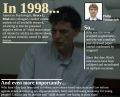 Rind Infographic
 -
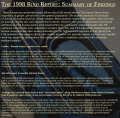 Summarized findings
 -
 Rind on the flawed Victimological model
 -
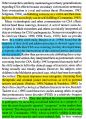 Excerpt from a 2000 Oellerich paper reflecting on the controversy
 -
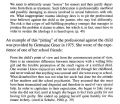 More from Oellerich
 -
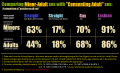 Infomeme compiling data presented by Rind in a later series of papers
 -
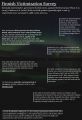 Rind later presented a secondary analysis on the Finnish survey data.


.jpg)


See also
- Rind resolution (official reactions to the Rind report)
External links
- Full text of the Rind Report
- Science and Morality or The Rind et al. Controversy - a counter-rebuttal to public reaction against the Rind Report.
- RBT Files - Ipce's full list of articles concerning the controversy.
- Everything you wanted to know about... - MHAMic and RBT files on Ipce.
- "Rind et al. (1998)" - BoyWiki Article.
- Wikipedia
References
- ↑ Govtrack Vote Data
- ↑ 50 Great Myths of Popular Psychology: Shattering Widespread Misconceptions about Human Psychology
- ↑ Carol Tavris, The uproar over sexual abuse research and its findings, in Society (2000) see also Sci-Hub for a version with no copying errors.
- Official Encyclopedia
- Research
- Censorship
- Sociological Theory
- Hysteria
- TV & Media
- Research into effects on Children
- Research: Broader Perspectives
- History & Events
- History & Events: American
- History & Events: 1990s
- History & Events: Personal Scandals
- Publications & Documents
- Pubs: Research/Papers
- History & Events: Moral controversies